
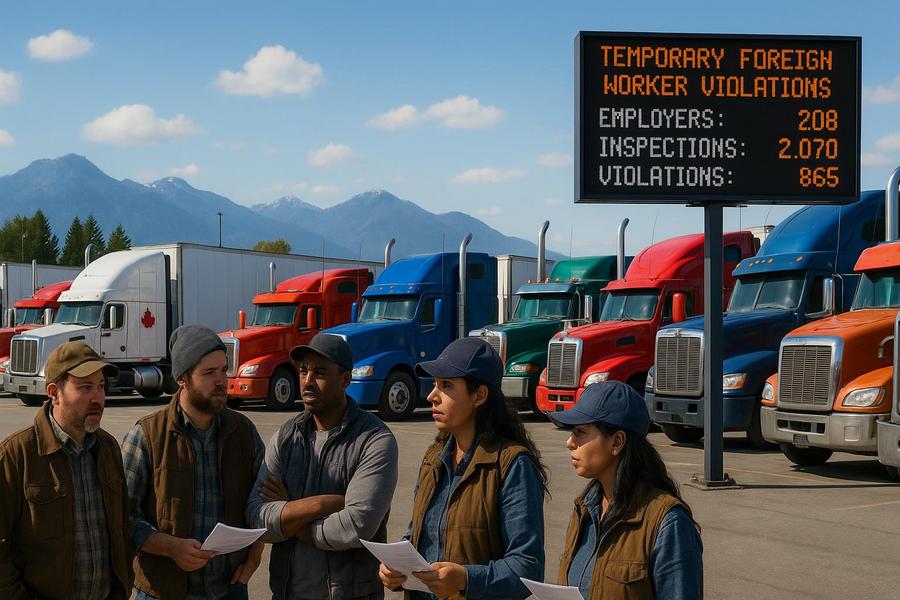
Over 10% of Canada’s Temporary Foreign Worker (TFW) program violations come from the trucking industry, with more than half of fines going unpaid, according to a trucknews.com analysis of government data. The investigation found 83 of 821 total violations between 2020 and 2025 were committed by trucking companies.
Monetary penalties against these carriers have reached $2.48 million, but $1.27 million remains unpaid. Most violators (65%) never settled their fines and instead became ineligible to participate in the program.
“The whole system needs to be overhauled,” said Stephen Laskowski, Canadian Trucking Alliance president. “It doesn’t need to be ended; it needs to be overhauled.”
British Columbia led with 26 violations, closely followed by Alberta with 25. The most common infraction was failing to provide requested documents to inspectors.

Some penalties were substantial. One Manitoba company received a $258,000 fine and five-year ban. Trans Empire Logistics of Delta, B.C. faced a $135,000 penalty with a decade-long exclusion from the program.
Laskowski argues violators shouldn’t just lose TFW eligibility but their right to operate entirely. “How the heck are they allowed to continue to operate a commercial vehicle on our roads?” he questioned.
Not all companies abuse the system. Kentville, N.S.-based Eassons Transport has utilized foreign worker programs since 2012, creating pathways to permanent residency for many drivers.

“It’s been a pretty rewarding experience in a lot of ways,” said Trevor Bent, Eassons’ CEO, noting about 70% of their drivers came through foreign worker recruitment.
Unlike companies charging foreign workers up to $50,000 for Labour Market Impact Assessments, Eassons covers the approximately $1,000 fee itself and conducts in-person vetting overseas.
Industry organizations unanimously support reforms. The Private Motor Truck Council of Canada advocates for an “approved employer” system requiring carriers to be vetted before accessing foreign labor.
“When used ethically and legally, the program can be effective,” said Angela Splinter, CEO of Trucking HR Canada. “Violations that lead to the abuse of employees hurt the individuals involved, but it also hurts the industry as a whole.”